Ten days before the first scheduled game of the 2020 season, Ohio Governor Mike DeWine gave the state’s 700+ schools the go ahead to proceed with fall football games. His theme is that it’s all about the student-athletes and the mental strain that not playing the games would have on them. However, given the continuing presence of the Covid-19 virus, the release comes with several constraints.
In essence, the directive issued a few weeks ago by the Ohio Department of Health still stands. But the requirement to (1) test participants for the virus within 72 hours of the game and (2) have the results in hand at game-time have been waived for high schools. That plus the declining number of daily virus cases in Ohio open the door for this decision. So here are several of the restrictions in place and the impacts of each:
The season will consist of six regular season games followed by seven weeks of playoffs. All teams are eligible to participate in the playoffs – The ODH wants the season wrapped up prior to Thanksgiving, fearing a rebound of the virus during the winter months. The revised season plan does this. However, the Governor hopes that the it won’t need to be cut short, which would result in the remaining games either canceled or perhaps played in the spring. DeWine also gave schools the option to defer to spring football. However, no playoffs would exist for those that elect spring.
Teams are limited to 60 dressed players – Massillon currently has 88 varsity players. Therefore 28, presumably assigned to the junior varsity, will not suit up and will lose the enjoyment that comes with being on the sidelines with their brothers on Friday night. For them the mental impact is increased.
Players must socially distance between the 10 yard lineswhile on the sidelines – This will be difficult to enforce, given that the players want to be close to the action and it will be up to the very busy coaches to police this. It’s also a strange rule given that it never occurs throughout the many practices leading up to the games.
Teams are permitted one scrimmage during the week prior to the first game – This is awfully late notice. It is not known at this time if Massillon will take advantage.
Fan attendance is limited only to parents and others that have close influence on the players, cheerleaders and bandsmen – This one strikes communities at the heart, with nearly a million fans affected at a time when some positive aspect of life is surely needed. No consideration was given to those communities that have been minimally exposed to the virus. The only alternative then is video broadcasting. In Massillon, the high school airs games live over the Internet via pay-per-view to those that live at least 30 miles away. The distance requirement is expected to be waived, so everyone with a computer will be able to at least view the games. But there is still the matter of season tickets for approximately 3,500 fans. This is a serious issue involving thousands of dollars and will need to be worked out quickly by the ticket office. Collectively across Ohio, schools could lose out on over $50 million dollars in ticket proceeds, which help to fund football in the first place. Finally, there is the OHSAA, which relies heavily on ticket sales, particularly during the last two weeks of the playoffs, to fund nearly their entire program. The impact of these lost revenues will be huge.
Marching bands are only permitted to perform at homegames – For most schools, that’s a lot of work for two or three games. Fortunately, Massillon was able to schedule all six games at home. The Tigers also hope to make a deep run in the playoffs, which would give the band additional opportunities to perform in front of those few hundred in attendance.
On another note, Head Coach Nate Moore has finalized the 6-game schedule. All games are at home and on Friday night, except for the one against Canton McKinley, which will start at its traditional time of 2:00 pm on Saturday.
With Ohio’s high schools scrambling to fill schedules for a 6-game modified slate, the Tigers and Eagles have agreed to face each other in Game No. 1 at Paul Brown Tiger Stadium on Friday, August 28. The two teams will not be unfamiliar with each other since they had originally planned to face off in the final scrimmage prior to the previous 10-game schedule, something they’ve done in each of the last few years. But in addition to the shortened season, scrimmages have also been canceled, so this game makes sense.
Massillon had originally planned to open with Bishop Gorman from Las Vegas as part of Nike’s high school football classic at Canton’s Benson Field. But the impact of Covid-19 forced Nike to cancel the 12-team event.
Then just a few weeks ago it was Pickerington North from the Columbus area. The game was slated for a Sunday afternoon kickoff, while being aired on ESPN2. But then the Ohio High School Athletic Association opted to shorten the season when the Ohio Department of Health preferred that all fall contact sports be wrapped up prior to Thanksgiving, fearing that the virus would rebound during the winter months. The OHSAA released a plan that included six regular season games followed by seven weeks of playoffs, with every team eligible to participate. This was the best chance for schools to play football this fall, while keeping it fair. And it appears likely that this will happen.
With the 6-game restriction and all current game contracts nullified, most leagues are opting to schedule league games only. In the case of Pickerington North, they have six teams in their division of the Ohio Capital Conference. Their league games will occur on Weeks 2 through 6. However, the league selected Pickerington Central for their opener since it is a rivalry game. Incidentally, ESPN will be airing the game, presumably because North has Ohio’s Number 1 recruit, Jack Sawyer and ESPN loves to showcase the Division 1 athletes. But just in the last couple of days, Sawyer elected to forego his high school season, graduate in December and then enrollment at Ohio State with the hope of playing spring football for the Buckeyes in their modified season.
So all of this means that large independent schools like Massillon and St. Edward are left to schedule mostly other independent schools.
The last time the Tigers and Eagles faced each other in a game that counted was the 2005 Division 1 state semifinals, which was played at Akron’s Rubber Bowl. In that one, Massillon overcame a two touchdown deficit to win the game 21-17 and advance to the state finals against Cincinnati St. Xavier. The Tigers’ Brian Gamble scored both of the game-winning touchdowns, the first on an 18-yard pass from Bobby Huth and the second on a 5-yard run with 1:56 remaining in the game. Massillon leads the overall series 3-2.
St. Edward is one of the most successful Ohio teams over the last ten years, having compiled an overall record of 114-20, including a regular season mark of 83-14 and a playoff record of 31-6. During that time they have lost only twice to a public school in the regular season, both of those setbacks occurring during the last two years and both to Mentor by single digits. Four times in that period they captured the Division 1 state championship: 2010, 2014, 2015 and 2018.
With the Tigers expected to have one of their better teams, this should be a great matchup. In addition, with these national powers taking the field, it is undoubtedly the biggest matchup in the state for that week. It may also influence the coaches who are voting for the playoff seeding since Akron Hoban also plays Eds the following week.
So strap it up. The 2020 season is about to get underway.
Three weeks before the 2020 season is scheduled to kick off, the Ohio High School Athletic Association has thrown a major wrench into every team’s schedule. Call it an act of desperation to salvage any kind of a fall season, or consider it a brilliant plan of compromise. But at the end of the day, it’s the Ohio Department of Health that apparently has the last say if this can actually happen, given their concern that spread of the COVID-19 virus will explode during the winter months coupled with the need to wrap it up earlier than originally scheduled.
In essence, the season has been reduced from ten games to six with every team qualifying for the playoffs. Coupled with that, the OHSAA has stated that all 2020 game contracts are nullified. Therefore, teams will need to start over and don’t have a lot of time to get it done.
For the many leagues across the state, the first priority will be playing as many league games as possible in those six weeks. So that should be an easy task for them. But for the independents like Massillon, it’s a little more daunting. Yet, Massillon’s schedule might be easier to create than most independent schools due to the types teams encompassing the original schedule. Here’s a look at the possibilities:
Canton McKinley – It’s a given that this game will be scheduled for Week 6.
Pickerington North – This game will probably happen due to two factors. The first is the national exposure both teams will receive, given that it will be broadcast on ESPN2. The second is that North is a member of a 6-team conference. So they can play all of their league games in weeks 2 through 6.
Canton GlenOak – The Federal League consists of seven teams, which means that each will play five league games with the need to fill the odd week. So the Golden Eagles will have a choice to make. They can stay with the Week 2 game against Massillon or schedule Louisville, which was their Week 8 opponent. With the Massillon game scheduled for home and Louisville on the road, it should be a simple choice.
Warren Hardingand Austintown Fitch – These two teams along with Boardman only play two league games due to being in the highest tier of the All-American Conference. They will be eager to schedule the Tigers. So these are both on the table.
Cleveland Benedictine and Cleveland St. Ignatius – The Bennies and Wildcats are independents and in the same boat as Massillon. Thus, these are potential games.
Barberton and Wooster – Both play in 7-team leagues and will each need to fill an open date, just like the Federal League. Barberton’s league is expected to expand to eight next year, so they could complete the 2-game contract with the Tigers this year and avoid problems in 2021. For Wooster, why pass up a home game in a year of reduced revenue?
Bloomington Hills, Michigan – This game was scheduled for Week 7. It’s doubtful that Michigan will follow the same format as Ohio, so Bloomington will not be in a position to move the date. However, since all teams will advance to the playoffs, many of the better teams in each region, such as Massillon, will have an initial bye week once it gets underway. Therefore, this game might still be a go, especially since the Black Hawks confirmed the trip to Tigertown just last week and the OHSAA is permitting a non-tournament Week 7 game.
A sidelight to all of this is that the regular season won’t officially end until November 14. This means that teams can play additional games after being eliminated from the playoffs, provided they don’t exceed a total of ten for the entire season. It’s possible, therefore, that leagues could finish their slates during that time.
Now we just need the Governor to give the OK to begin play.
Massillon Head Coach Nate Moore recently announced that the Tigers will play Pickerington North in the season opener after the cancellation of the Nike Classic and Massillon’s matchup with Bishop Gorman of Las Vegas. The game will be played at Paul Brown Tiger Stadium on Sunday, August 30. Kickoff is scheduled for noon. Note that this game is not part of the season ticket package and tickets will need to be purchased separately on a day to be announced.
Pickerington North is a Division 1 school and a member of the Ohio Capital Conference. In 2002 Massillon defeated Pickerington 14-0 in the regional finals of the state playoffs. The following year Pickerington split into North and Central due to enrollment growth. As North, the Panthers have compiled an overall record of 111-63 with an 8-6 playoff mark. Although, against rival Central they have won only three times against 13 losses.
North has had a couple of very good seasons, specifically in 2012 and 2013 when they recorded back-to-back 9-1 regular season marks. The 2012 team went on to capture the playoff regional championship, but lost to Cincinnati Moeller in the state semifinals. The 2013 team lost to Central in the second round.
Unlike Central, North rarely plays a team outside of Columbus proper. So coming to Massillon is likely to be a big deal for them. It should be a great experience and hopefully a good, competitive game.
The Tigers are coming off of consecutive Division 2 state finals appearances and are sufficiently talented to make another run for the state crown. Head Coach Nate Moore is 50-15 in his five years at Massillon.
There has been tremendous uncertainty surrounding the 2020 football season ever since the COVID-19 pandemic hit the U.S. Will there be a season? Won’t there be a season? Will the season be shortened? Will it be moved to spring? And so on and so on. This has been going on for at least five months. But there may yet be light at the end of the proverbial tunnel now that the Ohio High School Athletic Association has released a comprehensive plan to play. The OHSAA has made it clear that extracurricular activities are very important to the overall education of high school students and they don’t want these opportunities to get away.
“It is important to keep athletic activity moving forward,” said Dan Leffingwell, president of the OHSAA Board of Directors and superintendent of the Noble Local Schools in Sarahsville. “And with that, we believe our member schools provide our student-athletes with the safest possible environment to return to play and that our school programs are the best avenue to help students learn lifelong lessons and provide social, emotional and physical benefits that other programs cannot. Moving forward allows those students to continue to be engaged with their school coaches and teammates. Membership data also supports this decision. If we were to delay, our students will find opportunities to compete in sports through non-school programs that may not be focused on safety and are not education-based. Should data on COVID-19 change and/or the Governor’s Office makes changes to our plan, we have flexibility that would allow us to look at implementing other models for our seasons.”
As of now, pre-season practice and the intent to play a full season in fall remain in place, with today, August 1, holding firm as the first day of official practice for Ohio’s 700+ high schools. However, the 2-3 preseason scrimmages have been scrubbed, since contact sports cannot be played against another school until Governor Mike DeWine gives the OK. That requires him to lift the state of emergency he has declared for the state of Ohio. Non-contact sports have already been given a release, so hopefully football will follow shortly.
Here’s how the OHSAA’s plan works. If the Governor’s OK is given prior to August 28, then the season will proceed as planned. If the OK is given later than August 28 but before September 4, then the season will simply be pushed ahead one week. However, if later than September 4, then football will be delayed until a much later date. Per the plan, all sports yet to be played will be squeezed in some manner between mid-December 2020 and the end of June 2021.
Presumably, due to the inclement Ohio winter weather, indoor sports, such as basketball and swimming, would proceed first, followed by the fall sports in early spring and spring sports in late spring and into summer. Conceivably, football might commence games by the first of March while basketball tournaments are underway. And baseball might overlap the football tournament. There is also a possibility that the number of games for each season would be reduced. The door is even open to complete the football season in the spring in the event only part of the fall season were to be completed. Of course, if the situation concerning the virus that causes a delay in the first place does not improve by mid-December, then the plan would be in jeopardy also.
Fortunately, this is good news. Football may not be played in the fall or it may be interrupted, but there is a good chance that it will happen, provided Ohio’s case numbers go down for the Governor to release contact sports. On a side note, those few conferences that have elected to play only within the conference may want to rethink that decision in light of the OHSAA’s plan if fall football proceeds.
August 1st has been set by the Ohio High School Athletic Association as the official start of football practice for Ohio’s schools. Acclimation is permitted for the first few days, followed by conditioning with pads, followed by actual contact. Barring a halt by the governor, football should proceed as normal following that date.
But this season may be anything but normal on account of the Covid-19 pandemic. It’s entirely possible that no team is able to play all ten games. And it’s also conceivable that a school may not know whom they are playing from one week to the next, depending on whether an upcoming opponent is overly infected with the virus and must suspend their program for a couple weeks. It’s also possible that the start of the season could be delayed, with perhaps up to the first five games canceled.
The OHSAA has stated that they are not in a position to grant any permission for schools to play regular season games. They just manage the post-season tournament. So it may be left to the governor to make the final call. Many highly-infected states have already moved football to winter or spring and there may be pressure within state government (or simply “follow the leader”) to do the same in Ohio. But spring football poses a host of other challenges to the overall athletic program. In worst case, the entire season could just be canceled. Then again, the final decision may end up resting with each individual school as to whether they field a team or play an individual game that week.
Regardless of all this, the Tigers have been hard at work for the past few weeks with training and conditioning, all permitted by the OHSAA in this unusual year. They are on break this week. Next week they will resume activities, leading up to the official August 1st start date.
By handling some special requests by the coaching staff, I had the opportunity to observe a couple practices and, as a retired engineering project manager, I came away totally impressed with the detailed planning, scheduling and flawless execution that goes into these practices. The entire 4-hour time period is scripted with dozens of individual drills, each with start/finish times, and it moves very swiftly. Every player is engaged nearly 100% of the time, with either individual instruction or a group drill. The assistant coaches individually and collectively manage these drills, while head coach Nate Moore serves as a kind of orchestra conductor. The action is intense, the athleticism is forefront and there’s never a dull moment throughout.
The 90+ varsity players have been divided into two balanced groups, one with black jerseys and one with white. In only rare instances does a player merge for a short time with the other group. This may be a way of managing a potential exposure to the virus or just simply balance the attention each player receives during drills. In addition, all possible health precautions have been taken, from hand sanitizers to personal water bottles to regular cleaning of player equipment to the coaches wearing masks.
A few observations of the practice:
The off-season weight room work is really apparent, with the vast majority of players having thickened up their bodies beyond what would be their natural sizes.
The talent at wide receiver may be the deepest and fastest Massillon has ever had.
It appears that quarterback Zach Catrone will pick up where Aidan Longwell left off with his management of the offense and passing accuracy. He can also heave it 60 yards. And he may even run a little. There are also very capable backups at this position.
Many running backs are vying for the top positions, although it appears that Raekwon Venson is the current front-runner. The energy he brings is one of the highest on the team.
It will be difficult to select the five starting offensive linemen, given the size and depth this group possesses.
The defense will be big on the line, athletic at linebacker and just simply fast in the secondary. Lots of depth there.
Both returning kickers, Alex Bauer and Magnus Haines, can place their kickoffs at the preferred position, inside the five yard line.
The coaches are really high on this team and some believe it could surpass the performances of the previous two years. But in all reality, they just hope the team gets the chance to play.
Assuming that scrimmages are held, Massillon will host Avon on Saturday, August 8 at 10:30 am and then travel to Berea Midpark on August 14 for a 10:30 am match. The final scrimmage is up in the air. It’s scheduled at Lakewood St. Edward on August 21 at 6:30 pm, but the final determination of an opening week opponent may impact this. With the loss of Bishop Gorman, Coach Moore has several possibilities. But, as reported last week on Cleveland.com, Massillon and St. Edward have agreed to potentially meet if other opportunities don’t produce. The location of this game has yet to be determined. If St. Eds does move to the opener, then the Tigers will need to secure another team for a final scrimmage.
All of this should make for a very interesting year.
In Chinese lore 1970 was dubbed “The Year of the Tiger.” According to traditional myth, “Nian,” a beastly creature, tore through the countryside eating people on the night before the New Year. So, red decorations and firecrackers were used to frighten away the beast as the holiday approached. Such is the respect afforded the Tiger.
For Massillon, “The Year of the Tiger” is also special, because that was the year their beloved Tiger football team fashioned one of the most perfect seasons the town had ever witnessed: a 10-0 record, a state championship and a return to the glory years of the past.
In 1964 and 1965, under coach Earl Bruce, Massillon won all 20 games and was awarded back-to-back state titles. But Coach Bruce left for Ohio State and the Tigers fell upon hard times during the next three seasons. So the search was on for a coach that would return Massillon to the top. In the spring of 1969, Bob Commings was hired to assume the coaching duties, having won his last 22 games at Struthers. Coach Commings would stay for five seasons before accepting the position of head coach at his alma mater, the University of Iowa. But what a glorious five seasons it was.
The first real chance for Massillon fans to meet the new coach came during the spring kickoff at the Massillon American Legion. It was there that Coach Commings would display the fire and enthusiasm that was so prevalent in his personality. His love for the game would just envelop anyone who got near. There were handshakes aplenty as fans would hope that some of the vigor would rub off. Each person at the event left with the feeling that this man was someone special and was situated in exactly the right place and the right time atop the Tiger program.
Coach Commings inherited a team that was lean on senior talent, but he began to assemble the pieces and fill the voids with promising underclassmen. Suffering through the usual growing pains of a first-year coach, the 1969 Tigers finished the season 7-2-1. But they were competitive in every game, including in a 14-7 last minute loss to Canton McKinley (9-1). That set the stage for a run to the top.
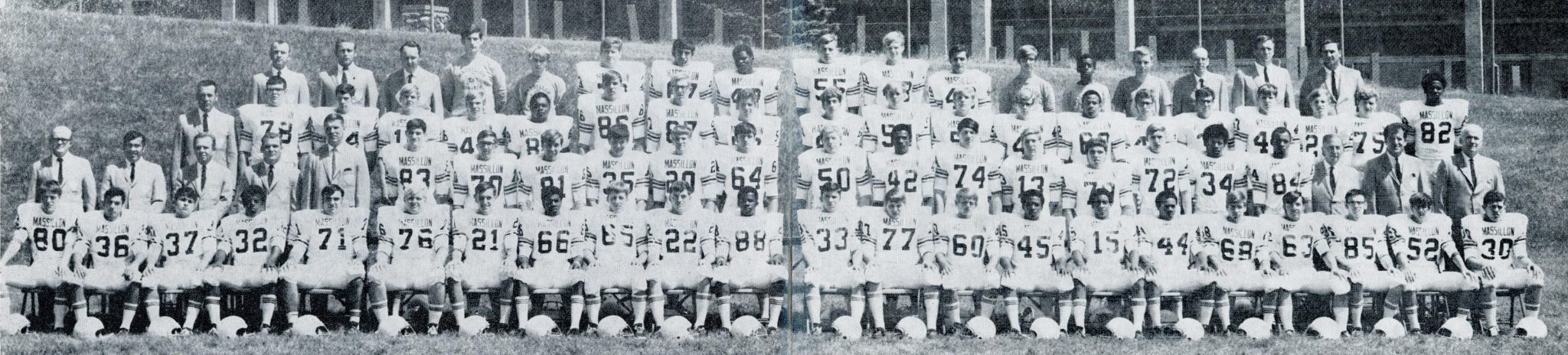
In 1970, with several outstanding players returning and Commings’ football philosophy firmly in place, Massillon rolled to ten consecutive victories, completely dominating every opponent. This 1970 team was duly acclaimed first in the state and second in the nation. As a personal reward, Commings was selected to lead the North All-Star team in the following year’s summer classic. With several Massillon players suited up, the North won the game 14-0.
But back to the 1970 season, which became a showdown between Massillon and Upper Arlington. In 1966, the Golden Bears played the Tigers for the first time and won on the road, 21-6. That victory firmly cemented UA as a state power. Arlington went on to post a 9-1 record, dropping their finale to Columbus Watterson (10-0), which was awarded the title. But the Bears ran the table for the next three years and were awarded the Associated Press state title each time. Included in that a 7-6 triumph over a 9-1 Tiger team in 1967. However, preseason prognosticators believed that the 1970 Massillon team had the talent to wrestle the state title away from Upper Arlington.
The Tigers were led by a stellar cast, including:
Mike Mauger: 6’-0”, 195 lb. senior tailback; Ohio Class AAA player of the year; rushed for 1200 yards at 7.5 yards per carry; scored 152 points; University of Wisconsin and Kent State University; tried out with the Dallas Cowboys.
Dennis Franklin: 6’-0”, 180 lb. senior quarterback; second team all-Ohio; University of Michigan, 3-year starter at quarterback; Detroit Lions.
Larry Harper: 5’-8”, 156 lb. senior wingback; Miami of Ohio; Churchman’s Magazine All-American; executive with Poloraid and Nike.
Steve Luke: 6’-2”, 186 lb. senior linebacker/tight end; third team all-Ohio; The Ohio State University; Green Bay Packers; co-founder USAthletes. Brother Bill also played in 1970.
Tim Ridgley: 5’-10”, 210 lb. senior defensive tackle; first team all-Ohio; Wyoming (football/baseball); Massillon head baseball coach.
Steve Studer: 5’-11”, 200 lb. junior center; all-Ohio (1971); Bowling Green; tried out with Chicago Bears; Massillon strength and conditioning coach.
Massillon opened the season with a 71-0 shellacking of Trotwood Madison, behind an offense that rolled up 533 yards. Tailback Mike Mauger set the tone for the season by romping 80 yards for a touchdown on the very first play of the game. Then, after disposing of Cleveland Benedictine 32-7 and Alliance 36-12, it was time to get down to business.
The opponent was Niles McKinley, an All-American Conference game that would be played on the road in front of a sellout crowd of 15,000. It turned out to be a defensive affair, with the ground-oriented Tigers hampered by a gimpy Mauger at tailback, who was injured the previous week. In fact, the only scoring of the first half was on a late field goal by Niles. But Massillon came roaring back in the second half to score three unanswered touchdowns and win 22-3. They also held the Red Dragons to just 132 yards. Niles would finish the season with a 7-2-1 record.
With the tough one behind them the Tigers went on a tear, outscoring their next six opponents 251-7. First up was Toledo Whitmer (7-3), a 41-0 victory in which Massillon surrendered just 69 yards. Next came a 40-0 blanking of Steubenville (6-4), behind a 416-yard offensive effort. It took just 40 plays to take care of Barberton, winning 52-0.
In a conference game at Warren, 15,000 rain-soaked fans watched the Tigers take the Black Panthers apart 22-0. Defense was the tone of the day and Massillon held Warren (5-5) to just three first downs and 29 yards of offense, none in the air. As expected, there was a bit of complacency when hapless Akron St. Vincent came to town. Massillon scored easily the first time it touched the ball to assume a 6-0 lead, only to see the Irish come right back on an 80-yard drive to take an early second quarter lead, 7-6. But the Tigers came back to life and showed why they were destined for greatness, scoring 36 points during the remainder of the quarter enroute to a 68-7 blowout. St. Vincent would manage just three yards for the rest of the night.
Here’s the Tigers vs. McKinley
Entering Game Ten against Canton McKinley, the Tigers were in first place in the Associated Press Poll, Upper Arlington at 9-0 was a close second and McKinley at 8-0-1 was third (the tie was vs. Niles). Based on these standings, all that was left for the Tigers to finish in first place was to defeat the Pups. Fans woke up that Saturday to a cold downpour, conditions that would persist for the entire day. It wasn’t pleasant for the 22,500 fans in attendance, but the players didn’t seem to mind. The victory dance started early when Massillon’s Larry Harper returned the opening kickoff 94-yards for a touchdown to give the locals an early 8-0 lead. Keeping the ball on the ground for the entire game, the Tigers ground out three more scores, two by Mike Mauger and one by quarterback Dennis Franklin on a 37-yard naked boot. The celebration was on as Massillon rolled to a 28-0 victory behind a 258-yard rushing attack. Mauger led the way with 27 carries for 137 yards. Franklin would throw just two passes. Meanwhile, McKinley was held to a mere 115 yards, threatening to score just once.
Massillon game scores:
Trotwood Madison (71-0)
Cleveland Benedictine (32-7) – finished 9-1
Alliance (36-12)
Niles (22-3) – finished 7-2-1
Toledo Whitmer (41-0)
Steubenville (40-0)
Barberton (52-0)
Warren Harding (22-0)
Akron St. Vincent (68-7)
Canton McKinley (28-0) – No. 3; finished 8-1-1
10-0 Record: 412-29
Upper Arlington ended their season 10-0, which at least kept them in contention for the crown. Below are their season results:
Mentor (27-6)
Worthington (35-6)
Cincinnati Princeton (24-7) – finished 8-2
Portsmouth (27-0)
Akron Garfield (41-7)
Lancaster (21-20) – No. 6; finished 8-1-1
Zanesville (34-10)
Chillicothe (49-0)
Newark (51-0)
Marietta (27-8)
10-0 Record: 336-64
Massillon was ranked No.1 throughout most of entire season, continuously from Week 5 on, and solidified that ranking in the final voting with the big victory over previously undefeated and state-ranked Canton McKinley. Arlington was certainly hurt by a 1-point victory over Lancaster. Here’s how the final A.P. voting went:
Massillon (10-0) – 223
Upper Arlington (10-0) – 210
Canton McKinley (8-1-1) – 119
Sidney (10-0) – 116
Cincinnati Moeller (9-1) – 115
Lancaster (8-1-1) – 104
Sandusky (9-1) – 92
Warren Western Reserve (9-1) – 84
Columbus East (8-1) – 50
Troy (10-0) – 25
Of course, 3-time defending champion Upper Arlington was none too pleased with the final results and there were informal talks about a post-season game to decide it in a playoff format. The proceeds would be used to benefit the Marshall University football program, which suffered the loss of their entire team that year from a plane crash. But the OHSAA would not approve the game. So the final results would stand with Massillon as the state champs. Nevertheless, the two teams met in Columbus two years later and the Tigers emerged a 14-0 victor.
1970 would be that last time Massillon was accorded Ohio Championship status. Two years later the OHSAA would institute the state playoffs and, in spite of numerous state semifinal and final game appearances, the Tigers would never take the crown due to the dominance of the parochial schools, something that wasn’t present prior to the playoffs. But the accomplishments of that 1970 team are still remembered by many Massillon faithful. It was a team that outscored its opponents 412-29. It averaged 6.5 yards per play while holding its opponents to a mere 2.2. It wasn’t a huge team size-wise, but it possessed outstanding speed on both sides of the ball. It also had some very talented players, several of whom played major college and professional ball. But most of all it was a group of players that just wanted to win and win big, never letting down their guard.
The offense was a unit that could be relied upon to score the first time it touched the ball. Its consistency to move up and down the field was uncanny. The “bread and butter” play was a simple toss sweep to Mauger. But the speed of the offensive line enabled the blockers to fly to the outside and pave the way for the 210 lb. tailback who, while not being the swiftest of running backs, was extremely adept at following his blockers. When QB Dennis Franklin was not handing off to Mauger in the wing-T scheme, he would flip the ball to Larry Harper on the jet sweep. That play was just devastating against opponents. Franklin himself was an average passer, but he possessed great leadership ability, a trait that aided him throughout a 3-year stint as QB at the University of Michigan.
The defense was simply smothering. Commings believed in an attacking system, one that placed eight men near the line of scrimmage to cut down opposing players before they had a chance to establish their blocks. In fact, opponents averaged just four first down rushing per game. Few Massillon teams controlled the line of scrimmage as well as this eleven did. That coupled with an outstanding offense was a formula for success.
At the end of the season Coach Bob Commings was selected as the Class AAA Coach of the Year. After two years as coach of the Tigers his record stood at 17-2-1 having outscored the opposition by an average of 36-7. For his achievement he was selected as the North head coach in the 1971 Ohio All-Star Game. Commings would coach for three more years before taking over the head reigns at the University of Iowa, after compiling a record of 43-6-2, including a pair of undefeated regular seasons.
Mike Mauger was named Class AAA Back of the Year. Tim Ridgley was awarded first team all-state offensive lineman and Steve Luke was named as second team linebacker. Unfortunately, a couple of outstanding seniors were overlooked on this team. They included quarterback Dennis Franklin and flanker Larry Harper.
Coaching staff:
Head Coach Bob Commings
Larry Coyer
Edward Kinney
Jim Letcavits
Gus Pachis
Ducky Schroeder
Nick Vrotsos
Dale Walterhouse
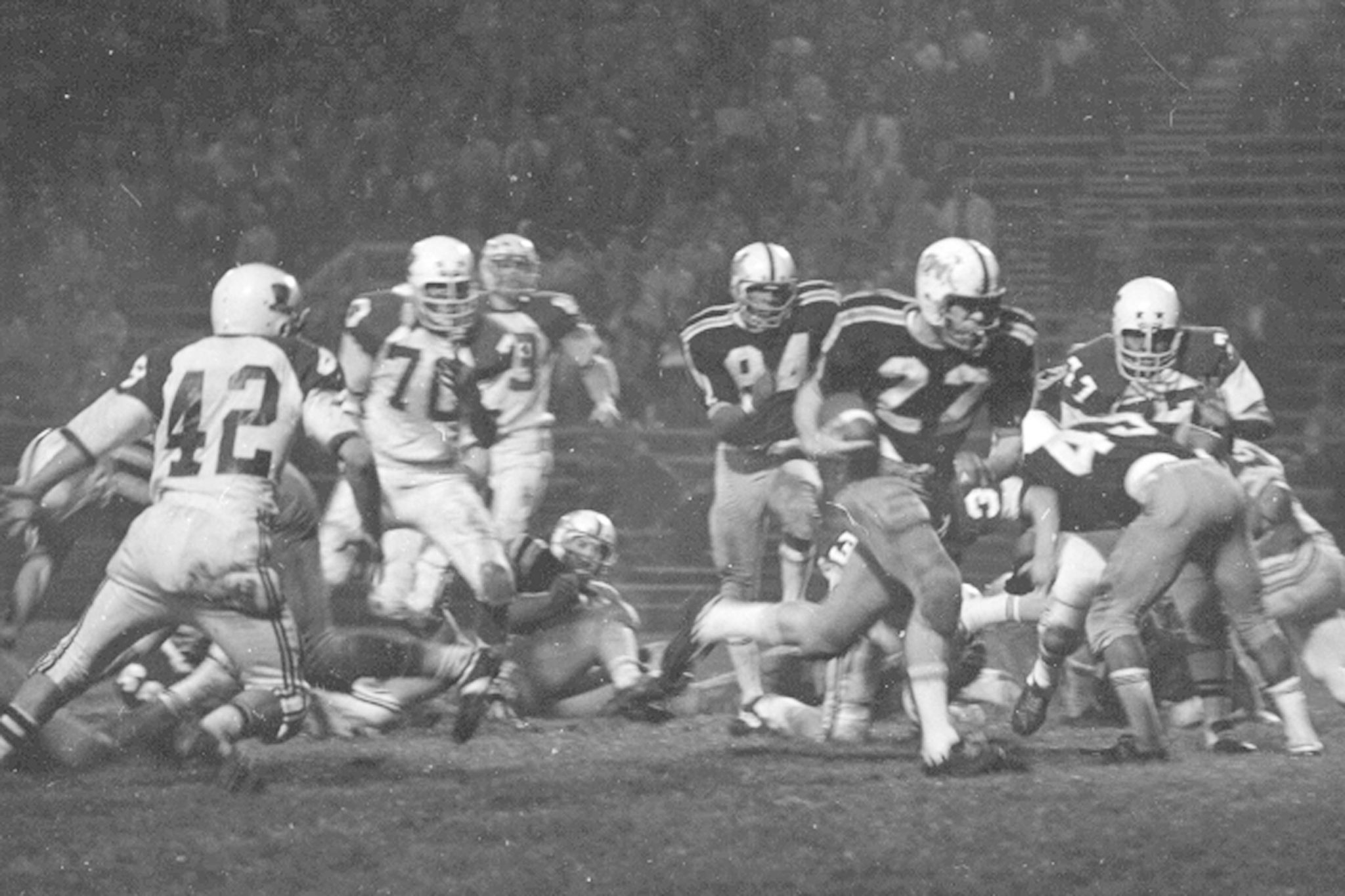
The following photos are courtesy of Rob Engelhardt (1970 WHS Hi-Times)
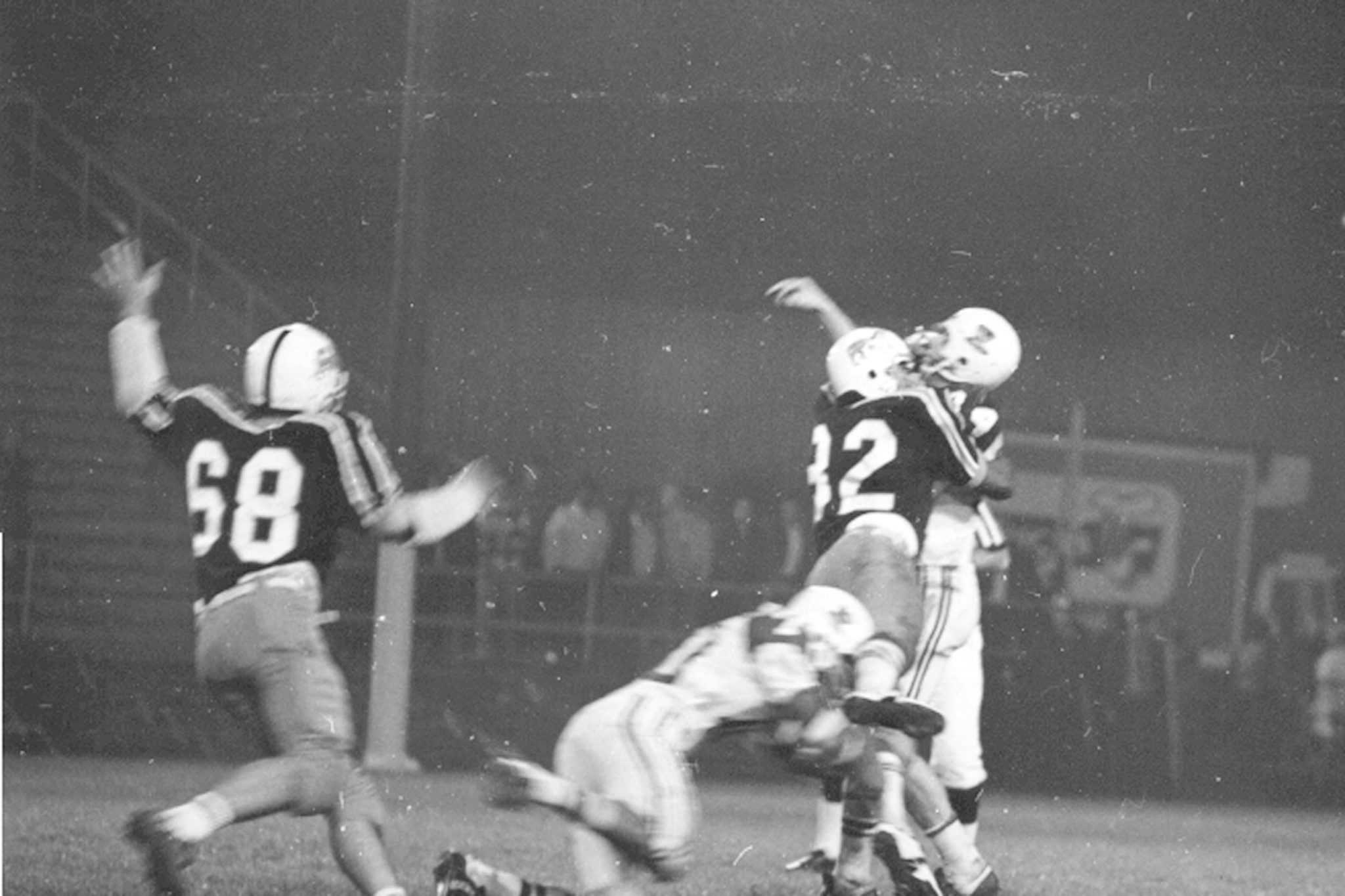
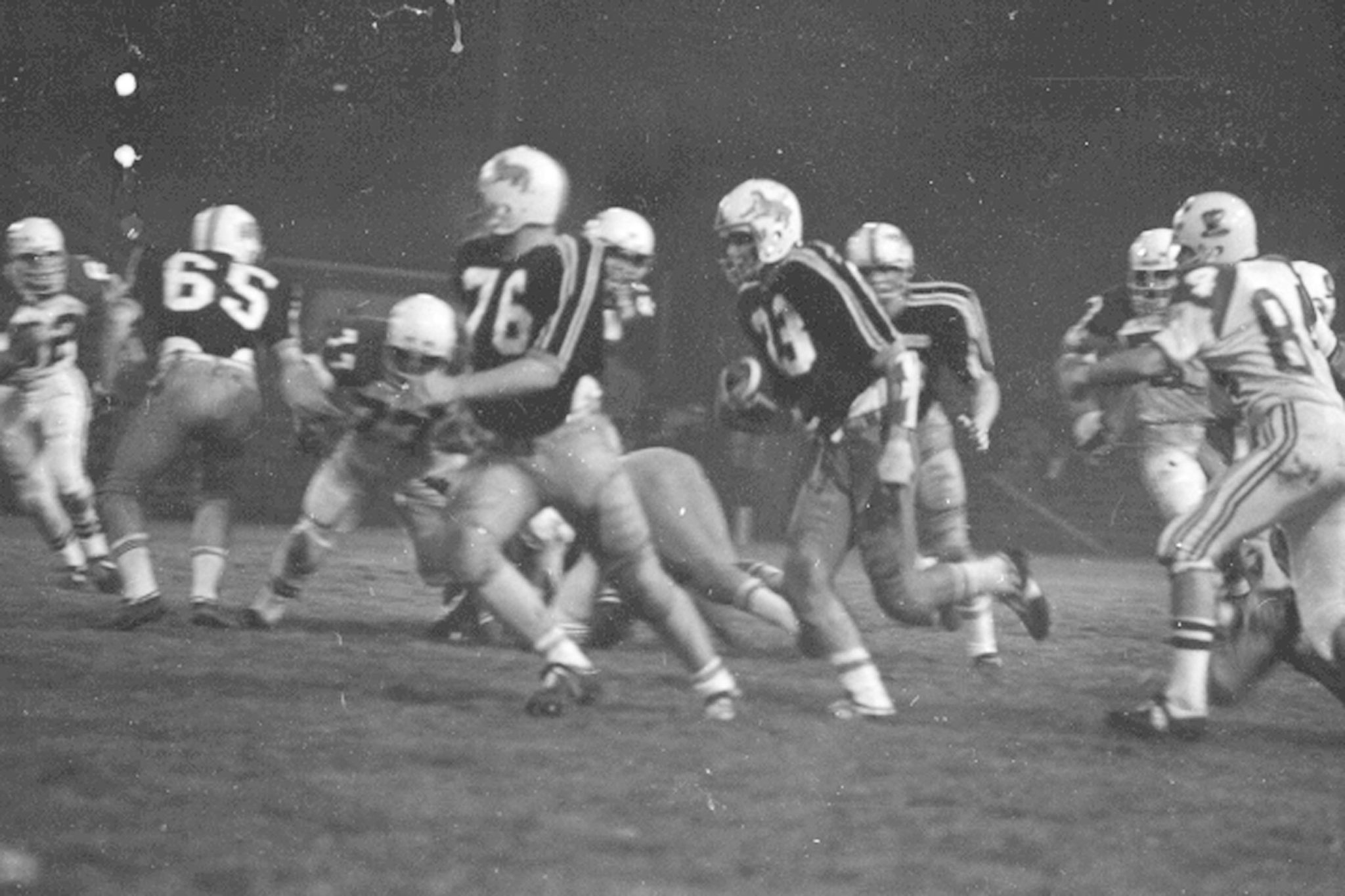
Quarterback Dennis Franklin under centerMike Mauger (22) heads for another touchdown; Mike McGuire (84)Willie Spencer (82) presesures the quarerback; John Nussbaumer (68)Kirk Strobel (76) leads the way for Tom Cardinal (33)
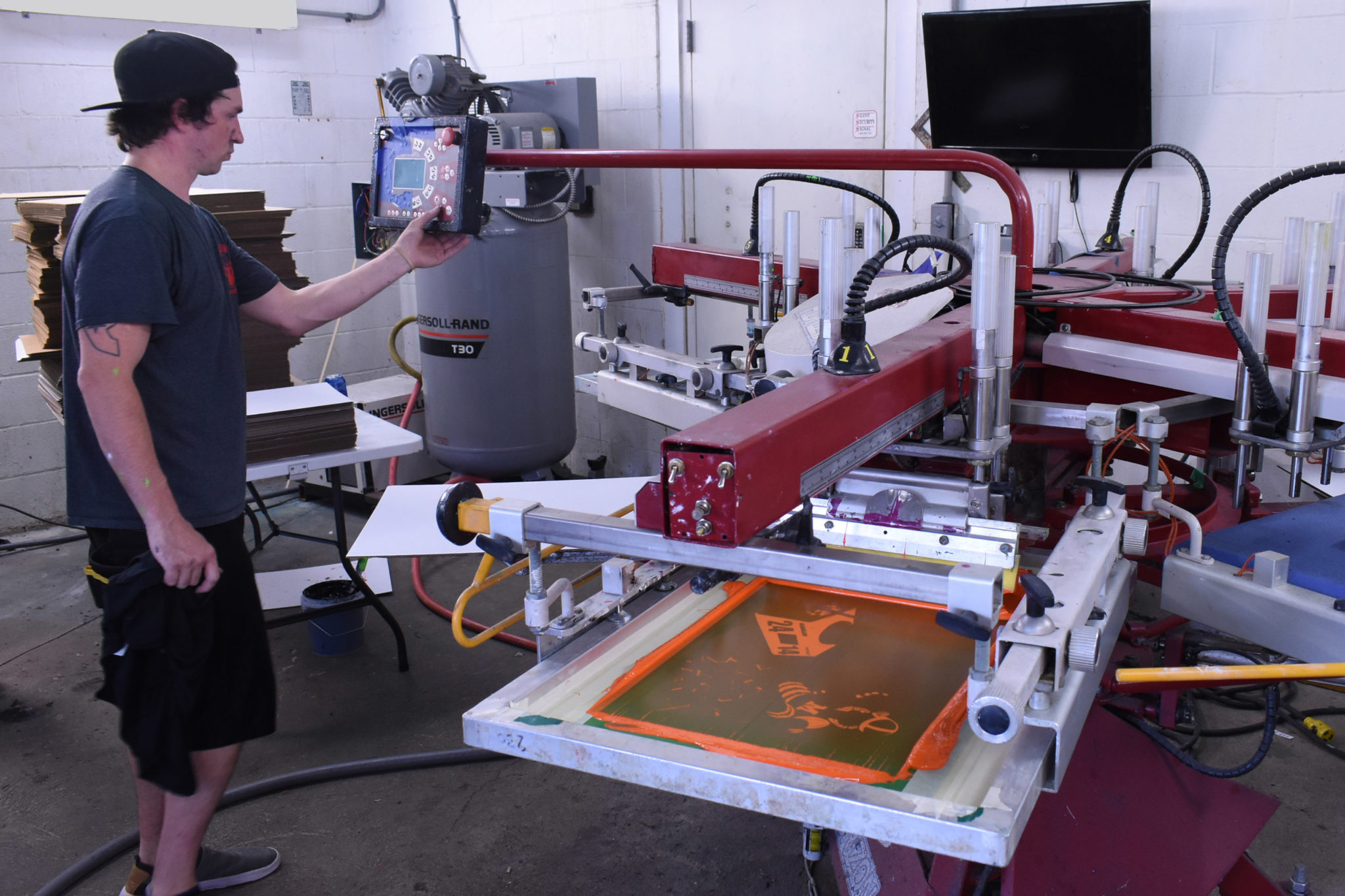
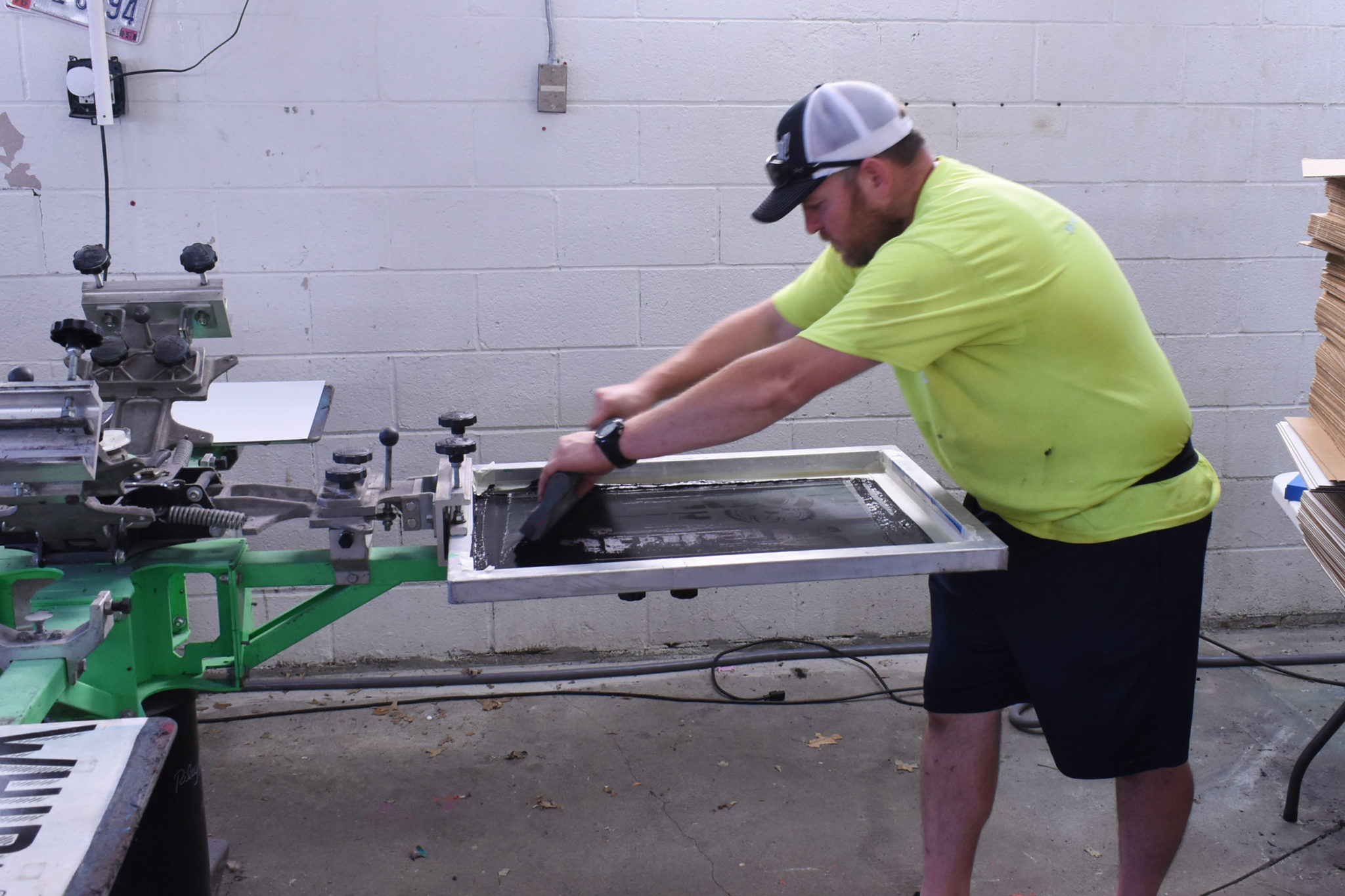
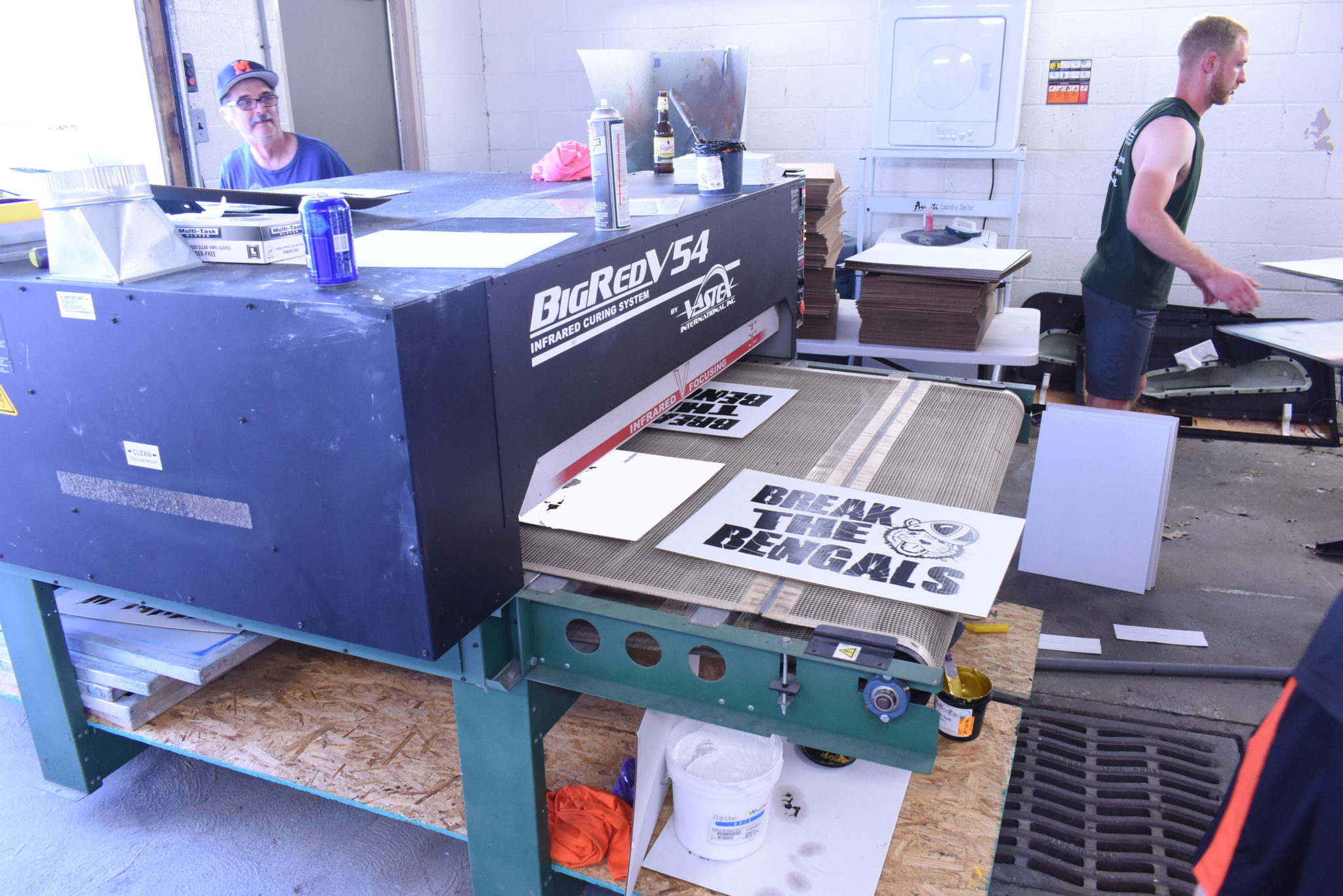
Last year those signs you saw in the windows of area businesses were made by the Booster Club Sign Crew at the old high school. But that facility is no longer available. So Brock James, owner of TeeShopz, stepped up to the plate and offered the use of not only of his sign-making equipment, but also a place to store the finished product, which encompasses thousands of signs. Now, with the addition of automated sign-making (including 3-color capability) and a dryer (no need now to rack dry the signs), production has increased by 50%. It’s not unusual to see the 10-man crew produce upwards of 1200 signs in a 1-1/2-hour session. Great thanks to Brock James. Please enjoy the photos.
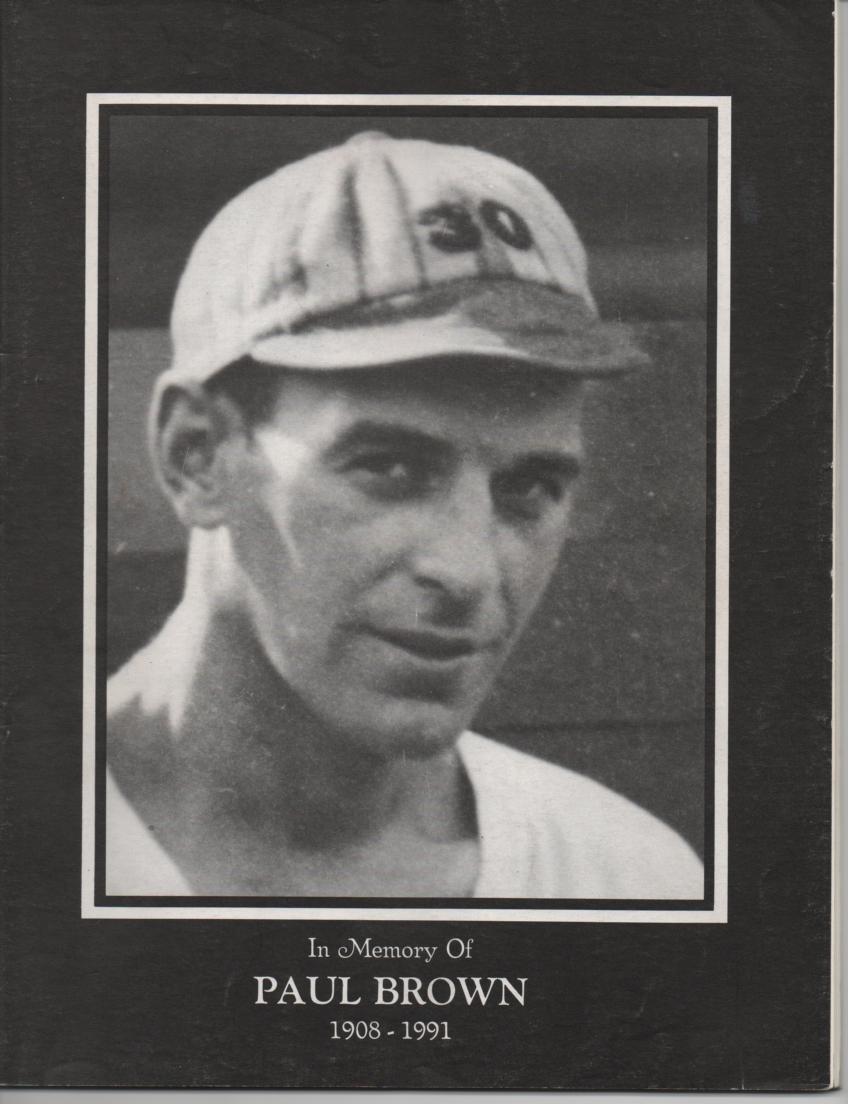
It was during spring football that Paul Brown knew his final team at Massillon was going to be a good one. But just how good he must have wondered? After demolishing all high school-comers by lopsided scores throughout the previous few years, he needed a better challenge. So an inquiry went to the University of Akron, which initially accepted the offer, but then graciously declined. However, Kent State University was more than willing and the scrimmage was set for April of 1940.
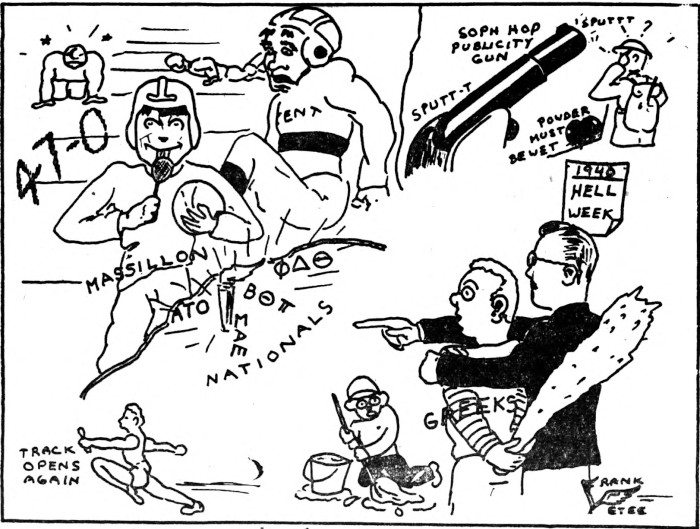
A short game story was written about the scrimmage in an April 16 edition of The Kent Stater with the title, “Flashes are Perfect Hosts, Lose 47-0; Gillom Stars; Only Seven Lettermen Saw Action.” Unfortunately, the text of that story is unreadable without a subscription and I have better use for the money. However, I recently came across a readable editorial in The Kent Stater that discussed the encounter and suggested that the game should never have been played in the first place. That piece is presented below.
Incidentally, Brown’s 1940 team went 10-0 that year, outscoring the opposition 477-6, as he captured his 6th state championship and 4th national championship. Brown always thought this team was better than his 1941 Ohio State Buckeyes. Meanwhile, Kent State finished the season with an 8-1 record and took home the trophy in the Ohio Athletic Conference with a 4-0 mark.
The Kent Stater, Volume XV, April 19, 1940 The Other Side, By Jack Leggett
EDITOR’S NOTE: The opinions expressed in this column are those of the columnist and do not necessarily represent the editorial policy of the Kent Stater. The Kent Stater accepts no responsibility for them.
There were two glaring faults to be found Monday when the Kent State UNIVERSITY footballers played the Massillon HIGH SCHOOL Tigers: In the first place, the game should never have been scheduled and, in the second, Kent should have won. There have been a good many loopy tricks pulled on this campus and that football game was by no means the dumbest—although it will be hard to top for a lovely exhibition of sheer stupidity.
The hardest thing about it to understand is why the game was played. Kent had everything to lose —which it lost no time in losing—and absolutely nothing to gain, regardless of how you figure it. Not only did our boys lose, but they lost convincingly. The score of 47-0 doesn’t permit any of us to climb flagpoles and tonsil defiant bellows of, “Fluke! Fluke!” There was no fluke. High school football players simply and sweetly and very easily hopped on a bus, chugged-chugged up here and beat the living britches off a university eleven.
No doubt this game did us much good and proved something or other to great advantage. It has at least given us prestige which we never had before—and which we had no desire of getting. A soft-pedaling sports write-up in this paper on Tuesday tried to snake Kent out of it without too much embarrassment, but it didn’t help much. The article stated that the outlook wasn’t too gloomy, due to the fact that only seven Kent lettermen were in the game. Well, so what? Any string of university substitutes should beat any high school team any place, any time. It just isn’t in the book that university teams lose to those from high schools.
If the result of such a game looks the least bit doubtful, the university should have enough plain horse sense to stay out. And, even if the college team is sure to win, there is no reason on earth why such a game should be played anyway. There could be no possible glory in winning. The layman would just wrinkle his nose and observe that university boys are expected to win.
That Massillon-Kent game was a prize example of foolishness and Kent has emerged with a blot on its reputation that it will be years in erasing—if it ever does. And, when you get right down to points, it is not the team’s fault in any respect. The members played their best and tried plenty hard. Massillon is just too fine a team. When team is compared to team, the result was not surprising nor shaming.
The high school university angle is what matters. Massillon is the best high school team in the state — the nation — or even the world. The Golden Flashes we know do not rate very highly. Why should our reputation have been risked when there was no point in it? That is the part that makes us so damned mad.
Now that it is all over most of us certainly hope with all the hope we have in us that everybody is satisfied. Coach Starn has made an unforgiveable blunder. He has humiliated his team and this university, and he has made Kent the laughing stock of football circles. I assume that Coach Starn is responsible for the Massillon game. He could, at any rate, have stopped such a move even if he didn’t start it. Other small universities have been challenged by Massillon. Akron University made arrangements for a game, then got smart and called the whole thing off. But, that’s all right—here’s dear ol’ Kent willing to be a goat. All this talk won’t do any good, of course. What’s done, very sadly, is done. All we can try to do now is to live it down —and it will really take a heap o’ livin’.
I also found a second short editorial on the same subject.
REVIEWS AND PREVIEWS OF CAMPUS NEWS, By JOHN MINE
SEEMS ‘that the story that caused the biggest “whispering campaign” on the campus this week was the gridiron run around handed down to the Flash football team Monday, by Massillon univer . . . er . . . pardon us, it’s a high school, isn’t it. It’s a taboo subject, Flash football, that is, so perhaps we had better drop the discussion. But Rosy’s trying hard . . . he’s even extended practice another two weeks. So let ’em come, Brimfield, Roosevelt, any of them, we can take them over.
The Ohio High School Athletic Association has released its revised divisional and regional team assignments for the 2020 post-season playoffs. With last year’s competitive balance formula essentially in place once again this year, there are very few changes to Division 2.
One Division 1 team, Toledo Bowsher, moved down to Division 2, while interestingly no team moved up to replace them. Cincinnati Elder, the 2019 Division 1 state runner-up, had the potential to also drop down on account of reduced enrollment, but the competitive advantage was sufficient to keep them in the top group. Five Division 2 teams are now in Division 3, including Columbus DeSales, Chillicothe, Alliance, Sylvania Southview and Parma Padua. Replacing them are University School, Dayton Belmont and Independence, which moved up from Division 3.
Massillon remains in Region 5 along with Akron Hoban. The only change to the region is the departure of Alliance.
It appears that once again Division 2 will be a formidable challenge for any team. So one has to ask: who among the 106 teams in that Division are expected to dominate? A few names readily jump to the top, such as Akron Hoban, Cincinnati LaSalle, Massillon and Cincinnati Winton Woods. And several others can also be thought of as in the mix; teams such as Mayfield, Toledo Central, Hudson and Avon.
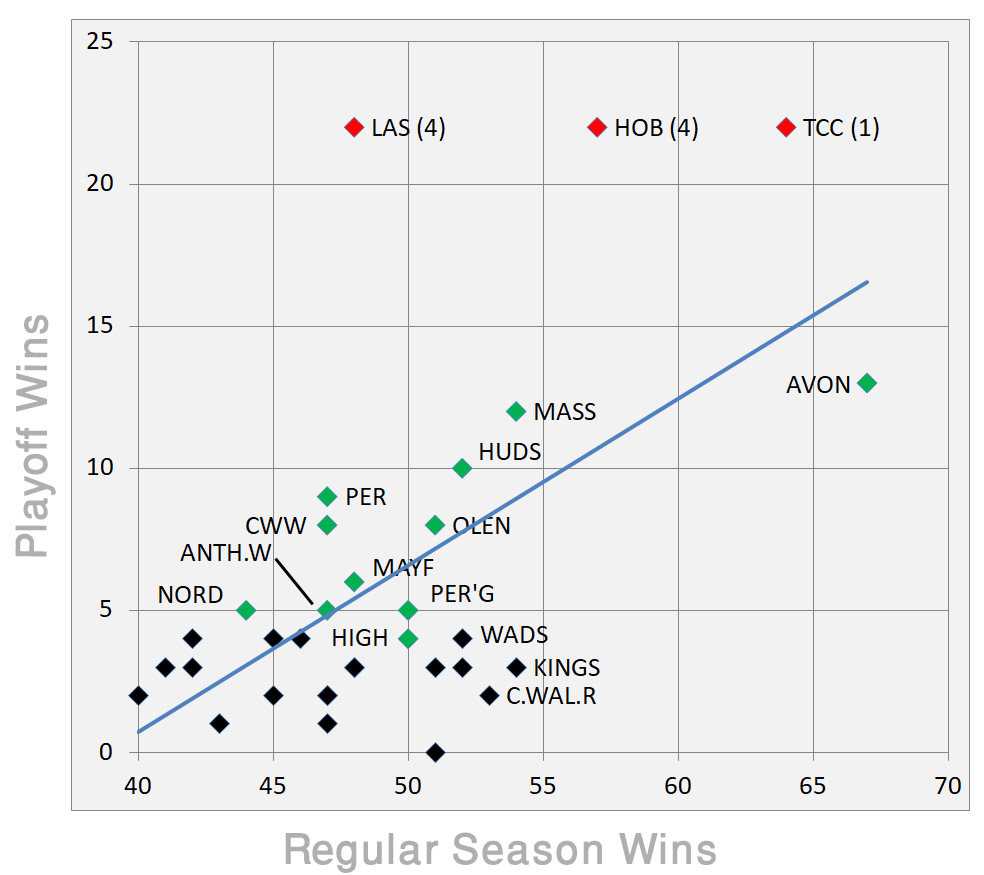
So to figure out who are the contenders, the two best factors to consider are regular season record and playoff success. A time span of the last seven years is considered, since this is the period of time since the OHSAA created a new Division 2 by dropping several former Division 1 teams into its ranks. Also, only teams that have won at least 40 regular season games over those past seven years are considered. The chart below matches these two factors against each other.
The “red” data points indicate teams that have won state titles. The “green” data points represent teams that have won regional titles, but not state titles. The remaining teams under consideration are as indicated in “black.” The “blue” line is a curve fit of all data points shown. Those teams located above the line appear to excel more than their regular season record would predict otherwise. Conversely, those below the line appear to struggle in the playoffs.
One can see that most of the teams are located in the vicinity of the “blue” line, although some, like Kings and Columbus Walnut Ridge win a lot of regular season games, but then fail in the playoffs against the better teams. The most likely reason for this is apparent weaker schedules.
Well at the opposite end of the spectrum are the highly successful parochial schools, including Cincinnati LaSalle, Akron Hoban and Toledo Central (aside from Cleveland Benedictine, which has just a “black” data point). These three schools have combined for six Division 2 state titles and four Division 3 state titles. This in spite of the wide discrepancy in regular season marks, which of course vary on account of their difficulty of schedule.
Among the public schools Avon, Massillon and Hudson lead the pack. All have shown great success both during the regular season and in the playoffs. Although none has won that coveted season-ending prize, they have combined for nine regional titles and two state finals appearances. Next up are Massillon Perry and Cincinnati Winton Woods. They have garnered four regional titles and three state finals appearances.
Next year the OHSAA will increase the number of playoff qualifiers in each region from eight to twelve, giving many more teams the opportunity to record playoff wins. Incidentally, had this system been place for the past seven years and had the teams in the region been the same as this year, Massillon would have been the only team in Region 5 to qualify for the playoffs in each and every year, while Hudson, Perry and Bedford would have qualified six times. The Tigers would have had a bye in the first-round in five of those years; Hudson, Perry and Akron Hoban, three times each.
Below are details of all the teams that are considered the best in Division 2.
Cincinnati LaSalle
Regular Season Record: 48-22
Playoff Appearances: 5
Playoff Record: 22-1
Playoff Highlights: 4 state titles
Akron Hoban
Regular Season Record: 57-13
Playoff Appearances: 5
Playoff Record: 22-1
Playoff Highlights: D2: 2 state titles; D3: 2 state titles
Toledo Central Catholic
Regular Season Record: 64-6
Playoff Appearances: 7
Playoff Record: 22-4
Playoff Highlights: D2: 1 regional title; D3: 1 state title; 3 regional titles; 1 state finals appearance
Avon
Regular Season Record: 67-3
Playoff Appearances: 7
Playoff Record: 14-6
Playoff Highlights: 3 regional titles
Massillon
Regular Season Record: 54-16
Playoff Appearances: 6
Playoff Record: 12-6
Playoff Highlights: 3 regional titles; 2 state finals appearances
Hudson
Regular Season Record: 52-18
Playoff Appearances: 6
Playoff Record: 10-6
Playoff Highlights: 3 regional titles
Massillon Perry
Regular Season Record: 47-23
Playoff Appearances: 4
Playoff Record: 9-4
Playoff Highlights: 2 regional titles; 2 state finals appearances
Cincinnati Winton Woods
Regular Season Record: 47-23
Playoff Appearances: 3
Playoff Record: 8-3
Playoff Highlights: 2 regional titles; 1 state finals appearance
Olentangy Lewis Center
Regular Season Record: 51-19
Playoff Appearances: 4
Playoff Record: 8-4
Playoff Highlights: 1 regional title
Mayfield
Regular Season Record: 48-22
Playoff Appearances: 5
Playoff Record: 6-5
Playoff Highlights: 1 regional title
Anthony Wayne
Regular Season Record: 47-23
Playoff Appearances: 4
Playoff Record: 5-4
Playoff Highlights: 1 regional title
Nordonia
Regular Season Record: 44-26
Playoff Appearances: 3
Playoff Record: 5-3
Playoff Highlights: 1 regional title; 1 state finals appearance
 History
 The first real chance for Massillon fans to meet the new coach came during the spring kickoff at the Massillon American Legion. It was there that Coach Commings would display the fire and enthusiasm that was so prevalent in his personality. His love for the game would just envelop anyone who got near. There were handshakes aplenty as fans would hope that some of the vigor would rub off. Each person at the event left with the feeling that this man was someone special and was situated in exactly the right place and the right time atop the Tiger program.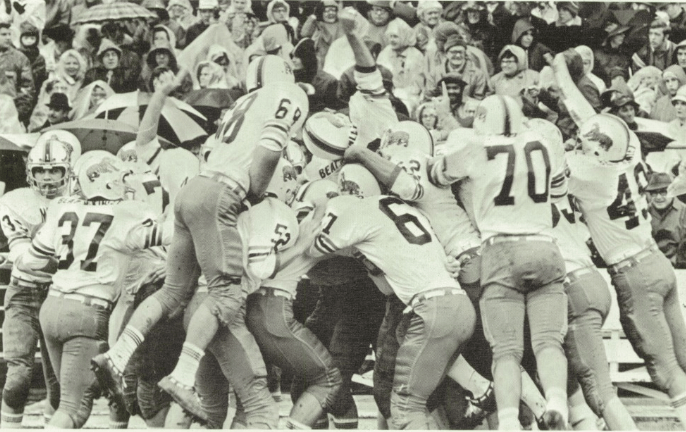
 1970 would be that last time Massillon was accorded Ohio Championship status. Two years later the OHSAA would institute the state playoffs and, in spite of numerous state semifinal and final game appearances, the Tigers would never take the crown due to the dominance of the parochial schools, something that wasn’t present prior to the playoffs. But the accomplishments of that 1970 team are still remembered by many Massillon faithful. It was a team that outscored its opponents 412-29. It averaged 6.5 yards per play while holding its opponents to a mere 2.2. It wasn’t a huge team size-wise, but it possessed outstanding speed on both sides of the ball. It also had some very talented players, several of whom played major college and professional ball. But most of all it was a group of players that just wanted to win and win big, never letting down their guard.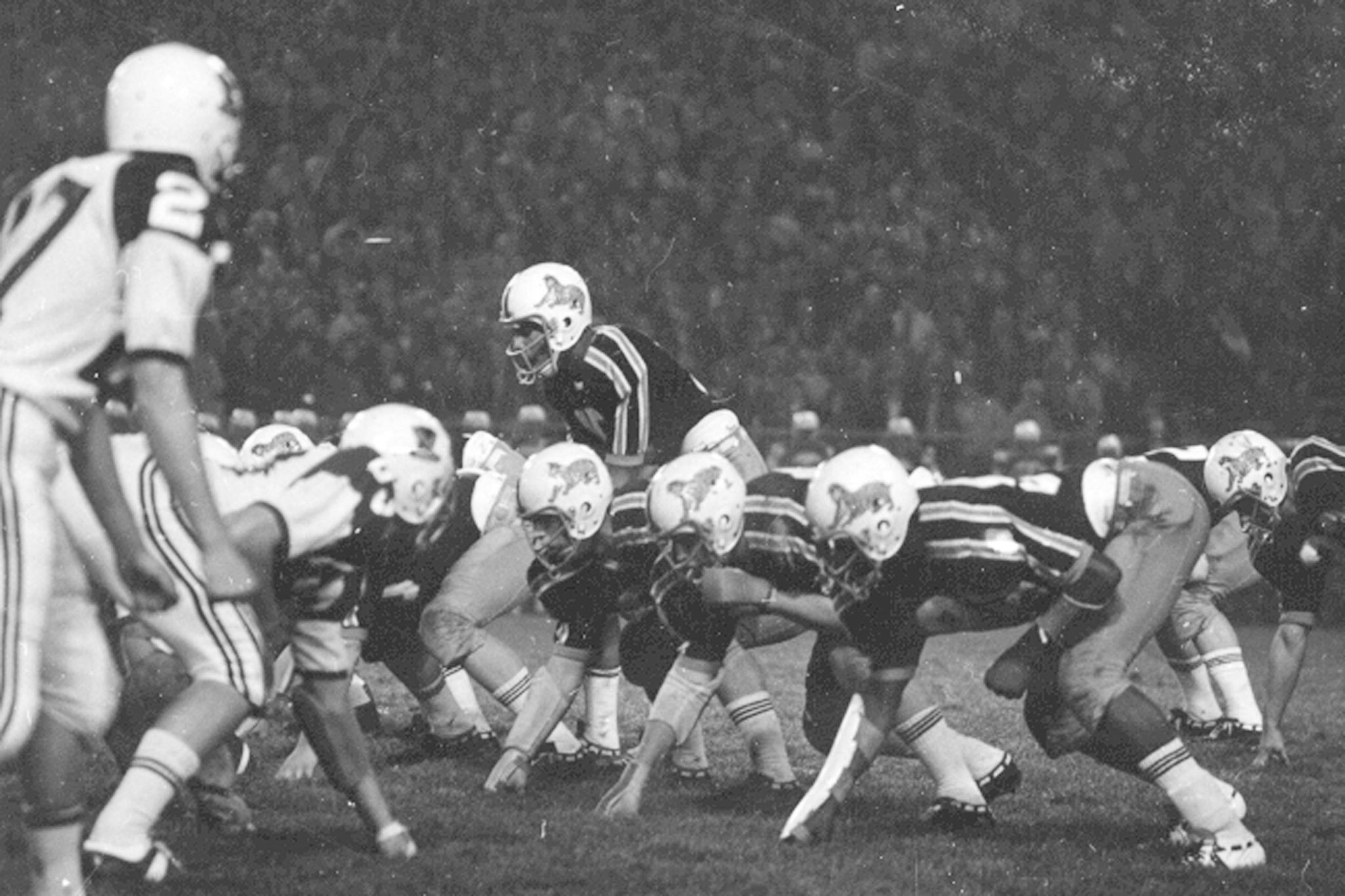

 The hardest thing about it to understand is why the game was played. Kent had everything to lose —which it lost no time in losing—and absolutely nothing to gain, regardless of how you figure it. Not only did our boys lose, but they lost convincingly. The score of 47-0 doesn’t permit any of us to climb flagpoles and tonsil defiant bellows of, “Fluke! Fluke!” There was no fluke. High school football players simply and sweetly and very easily hopped on a bus, chugged-chugged up here and beat the living britches off a university eleven.